pocoapocowithsmile


Leave a comment

Kathaumixw 合唱祭

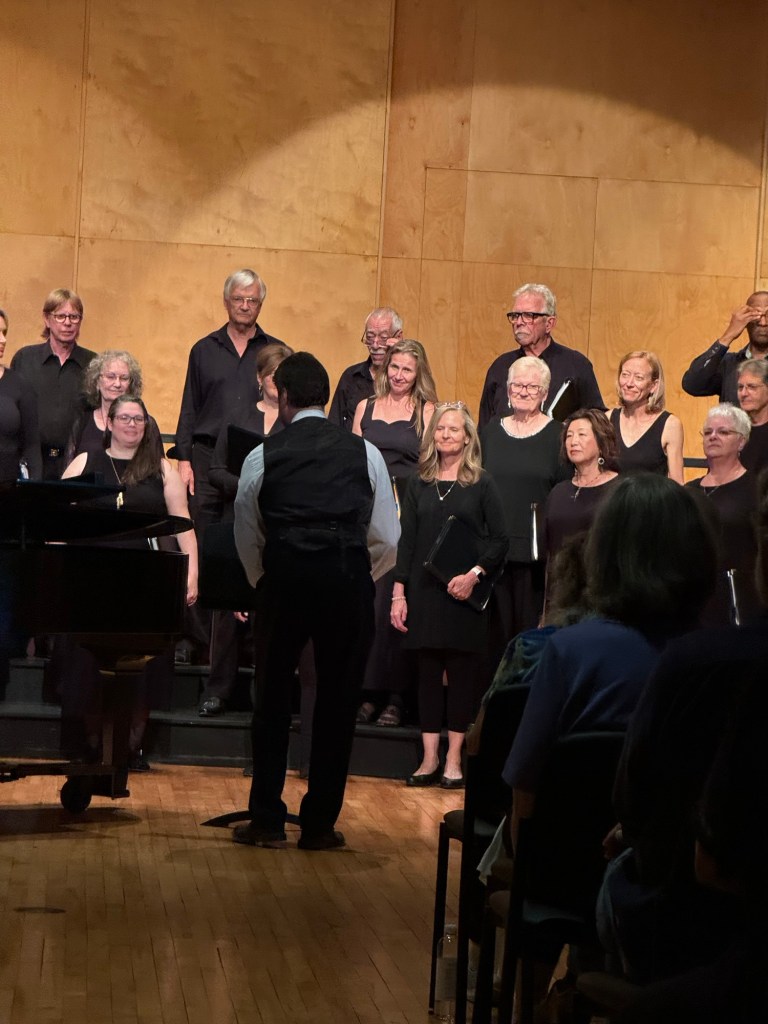
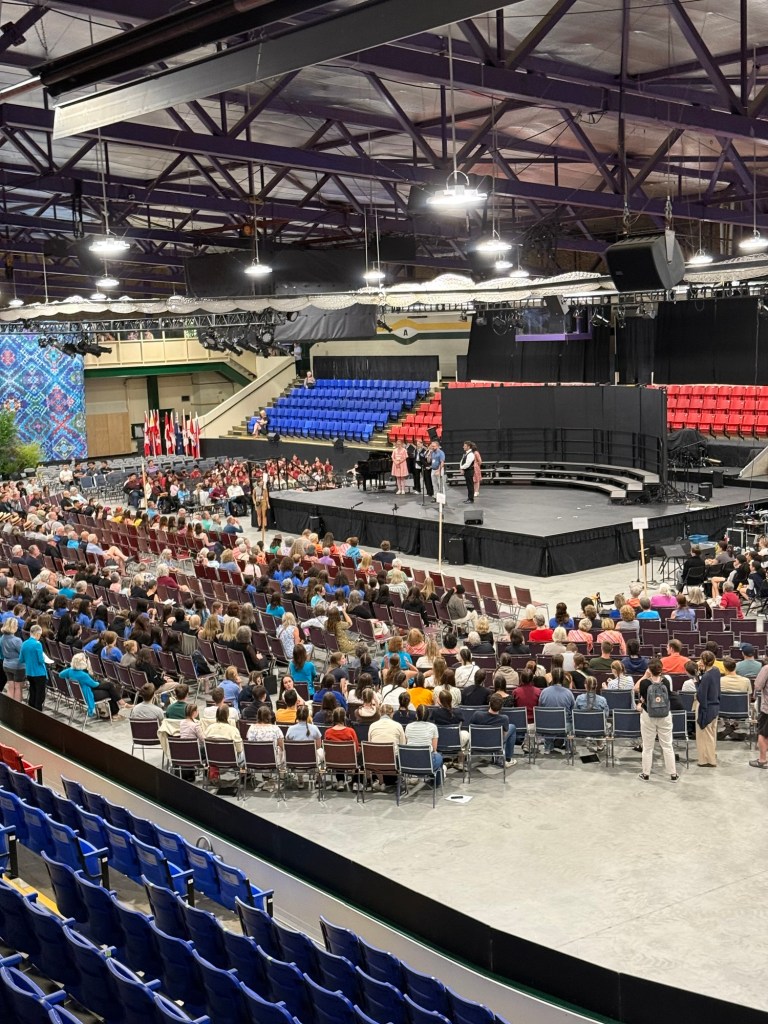
Every two years, Powell River, the small town I live, hosts an international choral festival called Kathaumixw. It is, I was told, the only international choral festival in Canada. Kathaumixw means ‘gathering of different people’ in the local indigenous language.

It’s been around for 40 some years, and apparently this year was the 20th festival. Canada’s Independence Day, July 1, was the opening day and it literally filled the small town with choral music for 5 full days. The participating choirs came from not only Canada and USA, but also Costa Rica, Slovenia, New Zealand, Philippines, and Taiwan. My choir was the festival host choir. What a super-hectic, super-stimulating, super-exciting, and super-exhausting 5 days!

When the festival was over, I found myself in a somewhat stunned or ‘out of it’ state. My heart was crying out…”no, I don’t want it to end!” “Let me linger in the exhilaration!”, then slowly turned to ”I am so sad”, “l’m missing the excitement already”….

Especially the final concert was so inspiring to my heart. For four days since the festival opened, almost 1000 singers, learned the three beautiful choral pieces together, and rehearsed together, under the direction of Dr. Zimfira Poloz. Dr. Zimfira is the director of the Toronto Children’s Choir and a well-known well-respected educator in Toronto. I got to learn so much from her.

Dr. Zimfira told us a bit of her life story. She was an immigrant (refugee?) from Kazakhstan. When the USSR had collapsed, she and her husband emigrated to Canada. They were concerned about their future in Kazakhstan and Canada was one of only two countries in the world willing to welcome them. Their life in Canada was not easy, but every time they were given opportunities or challenges they felt so grateful. She said she would never take anything for granted.

Wow, she went through a similar path as an immigrant as myself, I thought. Of course, I immigrated from Japan which is a peaceful and stable country, and I didn’t have to be concerned with my security or my future. However, to a woman from Japan with hard-to-pronounce name, and not especially talented in anything, Canada gave me opportunities to build a decent life. I met many good hearted people. Abundant nature, peaceful country, clean air, warm kind friends…I feel so grateful.

So now, the festival is over. The town is back to normal getting ready for the tourist season. I run into my choir mates in town, we say to each other, “I can’t get those 3 pieces out of my head…..They are still ringing in my head.” Aren’t we lucky?

Music is the only language that has power to speak directly to our heart. Music can unite people instantly. I want to say my heart-felt “thank you” to my late parents who initiated music education for me 60+ years ago. And “thank you” to our beloved town of Powell River that included me in its music community.

Opening concert
First rehearsal of 3 common songs 参加者全員での最初のリハーサル
Concert コンサート
After the concert with my granddaughter Sumi and her friend コンサートの後で

2年に一度のインターナショナル合唱祭が7月の第1週目、カナダの独立記念日(7月1日)から5日間にわたって、私の住む小さな町、パウエルリバーで繰り広げられた。Kathaumixw というこのフェスティバルはカナダで唯一の国際的な合唱祭だという。Kathaumixwとはこの地域の原住民の言葉で『いろんな人々の集まり』という意味だそうだ。

今回第20回目、カナダ、アメリカを始め、コスタリカ、スロヴィニア、ニュージーランド、フィリピン、台湾など世界中から合唱団が参加して5日間に渡ってのコンサートづくしだった。なんとも忙しく、刺激満タン、疲労困憊の5日間、でも終わってみると、高揚の余韻と共になんともいえない寂しさに心が揺さぶられ続けたことも否定できない。

特に1000人近い参加者で合唱した最後のコンサート、4日間にわたって皆でリハーサルした3曲がなんとも美しくて感動的だった。指導してくださった Dr. Zimfira Polozというトロントの合唱団の指揮者であり教育者である先生との出会いは一生忘れられない。

先生はカザフスタンからの移民(難民?)だそうだ。ソ連が解体してカザフスタンが独立した際、先生ご夫妻は将来を案じて移民申請をしたそうだ。そのときに受け入れ表明をしてくれた世界中でたった2国のうちの一国がカナダだったという。カナダでの生活は薔薇色ではなかったけど、いろんなチャンスが巡ってきて、ひとつひとつ挑戦するたびに、機会を与えてくれたカナダに感謝し続けているそうだ。

そんな話を聞いて私は痛く感動した。私と似た境遇なんだと思った。私は平和な日本から来て、将来を案じて移民したわけではないけど、発音しにくい名前の、何と言って特別な取り柄のない私にカナダはいろいろチャンスを与えてくれた。素敵な出会いがいくつもあった。美しい大自然、温かい親切な人々、私も深く感謝しているんだよ。

フェスティバルの5日間が終わって静かな町が戻ってきた。夏の観光シーズンも間近。町角でコーラス仲間に出会うと、「あの3曲が頭から離れないよ」と言う話になる。こんなすばらしい体験をさせてもらって私は幸せ者だと心から思う。

音楽は世界共通、人々の心に直接深く働きかけてくれる。今さらながら、60+年前、幼い私に音楽を学ぶ機会を与えてくれた亡き父と母に心から感謝。そして仲間に入れてくれたパウエルリバーに感謝。

Leave a comment

Stuff

—The wooden birds at my parents’ living room—

Two months after my father’s funeral, I went again to Tokyo and spent the whole month sorting stuff at my parents’ house.

It was overwhelming. Amazing volume of stuff, like my mother’s clothes, kimono, her artwork of silk-dye paintings, bone china paintings, and her water color Japanese paintings, lots of gifts given to my father during his 30 years of working in Los Angeles, Indonesia and San Francisco, many of them still beautiful, carved on valuable teak woods that are now extinct, and also…there are many artworks my parents purchased….Where can I start?

I did my best to sort stuff to a pile of keeps, no keeps, and throw aways in that one month I was there. However, I was no way near finishing when I had to return to Canada.

It was beyond my imagination how difficult this task could be….I was stunned to see how wasteful…. I was surprised to find out how different we all are. Even family members have different views and values, different reactions, different tastes…..

Just after we arrived in Los Angeles in 1969, we went on a family driving trip to Mexico. The moment we crossed the border from the US to Mexico, the scenery changed drastically, from green lawns to brown desert. Dry dusty sands were blowing everywhere and tiny houses looked built with layered carton boxes. People looked poor wearing clothes torn and disfigured. I was shocked to see how differently inside and outside of the border looked.

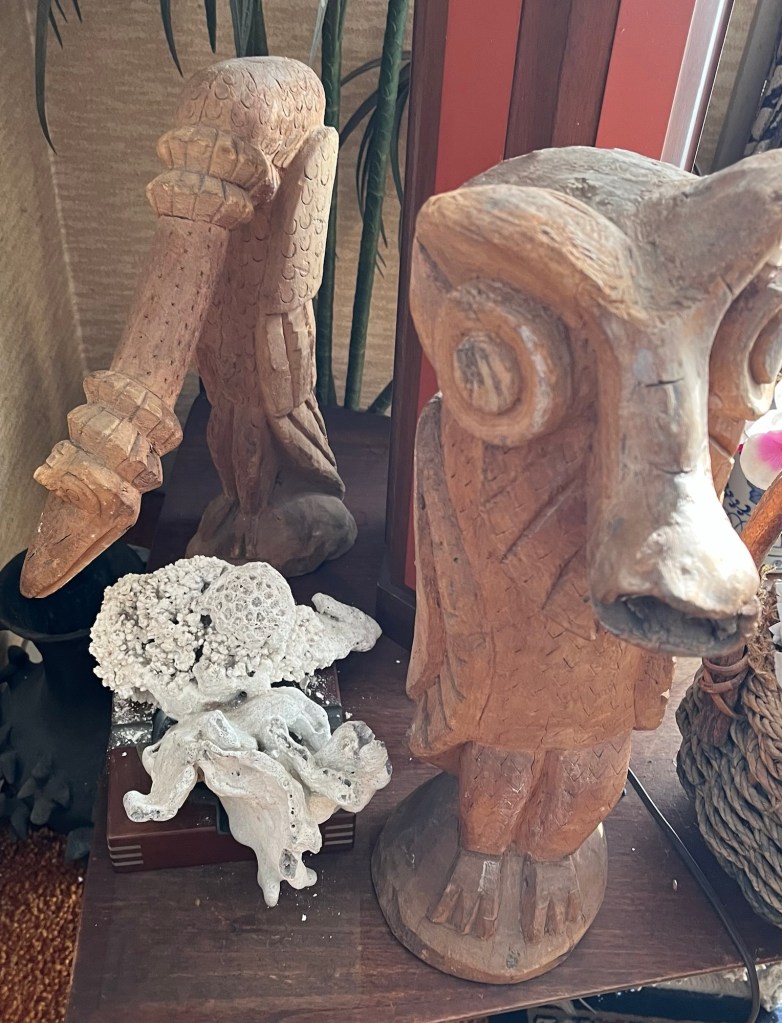
We saw a man with brown tanned face wearing a big straw hat, putting some wooden carved birds at the roadside. My mother said, “how interesting! Can we stop and see?”

So we stopped our yellow Chevy Impala, got out, and looked the birds that this cheerful and friendly man had carved. The birds were so simple, not even oil stained, but so interesting and cute.

From that day, for 55 years the birds sat in the corner of my parents’ living room and watched over us. Whenever I saw these birds, I thought of the man’s smiling face, his straw hat, the burning sun, the dry sand, the poor villages….. I couldn’t dare throw the birds away. I wanted to send them to Canada. However, I was told that since the birds were carved with untreated wood, they would not be permitted to enter Canada. I was crushed…so sad.

After I came back to Canada, I received a message from my daughter in Tokyo. “Look who are here!” The wooden birds are now sitting in my daughter’s home! ‘Oh they were adopted!’ You wouldn’t believe how happy I was!

I was born in 1955, only 10 years after the end of World War II. I grew up during the time Japan was so poor, just recovering from the dreadful war, and there was nothing. Things were scarce and nobody had anything luxurious. ‘Do not waste things,’ ‘you have to take care of things’, ‘cherish your possessions’, my parents and grandparents told me over and over. Perhaps that’s why my heart aches when I see things that look completely fine thrown into the garbage pile. I hear the utterances of others…. I don’t want this… I don’t want that… it’s not my taste…. it doesn’t suit my house….,I don’t have the space for this…..

I know it’s a popular trend to get rid of things, keeping the bare minimum, and living a simple life as an extreme minimalist.

However, I can’t do that. Of course, I don’t agree with the lifestyle with too much stuff, the house turning into a hoarder’s.

But for me, stuff is part of my history.

I would like to treasure things that bring back memories. I want to keep loving stuff that had dear meanings in my life. I would like to value my relationships with those special things.

After all, did you know that Zen Buddhism which is supposed to have had immense influence on Japanese culture, actually teaches that ‘things’ have souls as well?

—The wooden birds in my daughter’s home—

2024年の年末に父が他界した。お葬式の2ヶ月後、私は再度帰国してまるまる1ヶ月ほど実家の整理に明け暮れることになった。実家は亡き母の洋服や着物、母の作品である紅型染や陶器の絵付けや日本画の数々、亡き父の30年にわたる海外駐在中に贈られた置物の数々(多くは今は絶滅したとされる美しいチーク材だ)、それに加えて両親が購入した記念品や美術品で溢れ、どこから手をつけて良いやらわからない状態。とりあえず手をつけられるところから、処分したり片付けたり、できるだけのことをしてカナダに帰ってきた。

それにしても何と難しいことか。なんと無駄が多過ぎることか。物に対する考え方が人それぞれどれだけ異なることか。考えさせられることが多かった。

1969年、ロサンゼルスに父の転勤で落ち着いたばかりのころにメキシコまで初めて家族でドライブ旅行をしたことがあった。アメリカからメキシコの国境を超えた途端、景色が緑の芝生から褐色の乾いた砂漠へとガラッと変わった。砂ぼこりの舞う乾いた土地に、まるでダンボールを重ねただけのように見える小さな家々、ボロボロの服をまとった人々の姿にショックを受けたことをはっきり覚えている。

そんな道端で一人の麦わら帽子をかぶったおじさんが素朴な木彫りの鳥たちを並べていた。母が目ざとく見つけて「面白いね、ちょっと止まって見てみようよ」と言う。私たちは道端に黄色いシェブロンのインパラを停めて、日焼けした人懐っこい顔のおじさんの木彫りの鳥たちに見入った。本当に素朴で木にニスも何も塗ってない、ただ彫っただけの鳥たち、でも何とも愛嬌があって面白かった。

その日から55年以上も2羽の木彫りの鳥たちは実家のリビングルームの一角で私たちの生活を見守り続けてくれた。鳥たちを見ると必ずあの日のおじさんの笑顔が、乾いた強い陽射しが、貧しい村々が、私の胸によみがえってくる。どうしても捨てられなくてカナダに持って帰ろうと思ったら、加工されてない生木の作品だから検疫を通れないと聞いて、泣く泣くあきらめることになった。がっかり…悲しかった。

カナダに帰ってしばらくしたら東京に住む娘の知香から写真が送られてきた。「ここに居るのはだーれだ?」何とあのメキシコの生木の鳥たちが娘の家にちんと居座っているではないか。ああ、引き取ってくれたんだ、と無性に嬉しくなった。

私は1955年生まれ。戦後10年の物のない時代に生まれて、『物を粗末にしてはいけない、大事にしなければいけない』と言われ続けて育ってきた。そのせいか、『これもいらない、あれもいらない、家に合わない、家が狭い、置き場所がない、』とどんどん捨てられていく物たちを見ていると胸が痛む。

今流行りの、物を捨ててすっきり、最小限の物だけで暮らすのが良いとするミニマリストの極端な考え方にはついていけないものを感じる。もちろん物がありすぎてゴミ屋敷になるのは困るけど、想い出に直結した物を大切にすることも大事なんじゃないか。生きてきた軌跡を愛でることは単なるおセンチだとは私は思わない。

『物にも魂がある』というのは大切な禅の教えじゃなかったっけ?


1 Comment

Funeral

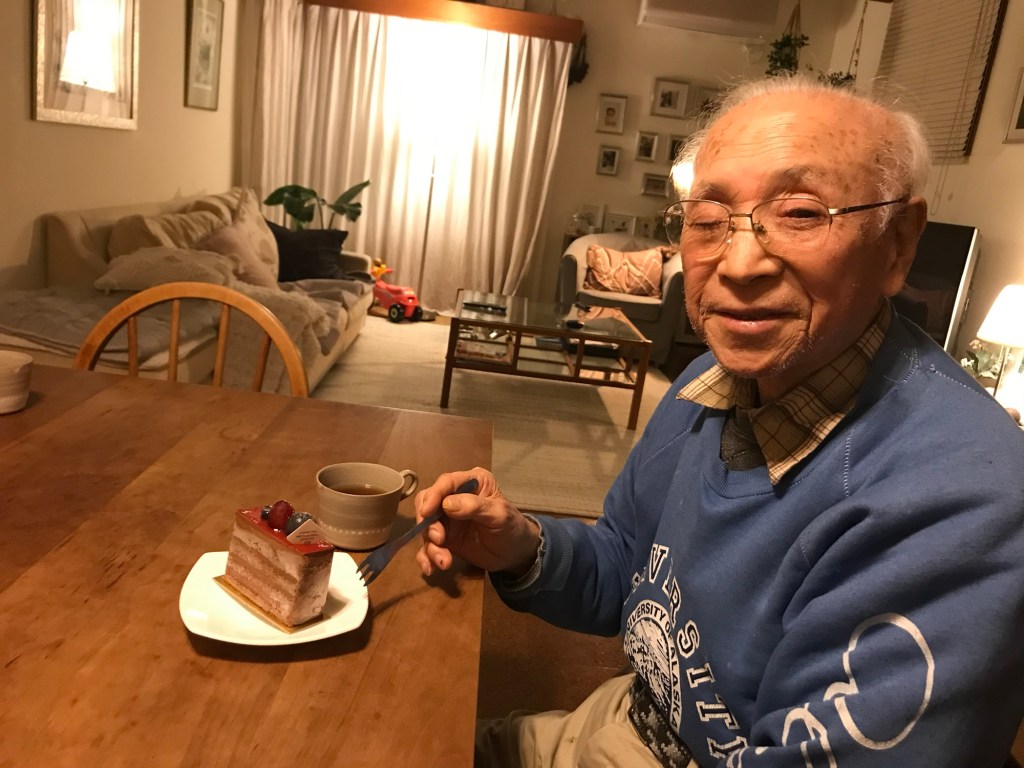
My father in 2019

My father’s funeral was held at his church in Tokyo. It was a Christian service. Although the minister of the church had never met my father, he performed a heartfelt, sincere service that I truly appreciated.

Although I appreciated the funeral service, I didn’t feel peaceful about everything else after the service. The farewell staging was so pretentious that it left me cold. I have to note that it was after the church service and it had nothing to do with the minister or the church.

The farewell staging, or final goodbye, included some discomforting rituals.

The funeral director from the undertaking company, for example, told us to stroke my father’s face to express our love. The family members all stroked the icy cold face.

I also felt awkward sitting in the hearse which was driving off from the church while a group of people singing hymn were seeing it off. It reminded me of a scene from a century old black & white movie. The hearse carried my father and us to the crematorium.

And more dreadful ritual was that the family members picked up his burnt bones with chopsticks and placed them into the urn.

It didn’t sit well with me at all. I felt extremely uncomfortable. People say it’s just how funerals are conducted in Japan. It’s one of those cultural things. It sure is a big cultural difference. But it was not just that. Something was making me feel uneasy. What was it? I kept wondering.

It’s been almost 3 months passed since that funeral day. Thinking back now, I feel that the reason I felt so uneasy could be coming from my fundamental lack of understanding.

What is the objective of the funeral? I feel that in Japan the focus of the funeral is on “death”. It reminds us over and over that the person is now dead.

The focus of a funeral in Canada, where I have been living for the last 35 years, is more on “life”. The life the person lived is remembered.

I still remember how the cold face felt on my palms. It was something I didn’t want to remember. I wanted my father to be alive in my memory until the day I die. I wanted him to be a healthy lively person with a warm and beautiful soul, not a cold corpse or fragile bones.

Experiencing such a cold face would be too shocking for my little grandchildren. I worry that they would only remember that coldness rather than the warm smile and beautiful bass voice of their great grandpa who loved them.

My heart sank. It was the saddest day of my life.

父のお葬式はキリスト教の教会で行われたとはいえ、日本の典型的なお葬式であったことは歪めない。日本のお葬式とカナダのお葬式はなんだか根本的に違う気がする。お葬式の式自体は、父に会ったこともない牧師さんだったとはいえ、心のこもった誠実な式だったと思う。

でも式の後のお別れの演出が何ともわざとらしくて嫌だった。例えば葬儀社の人が、親族の人たちに、冷たくなった父の顔を撫でるように誘導したり、霊柩車を見送るときに讃美歌を歌いながら見送ったり…。そうしてそのまま火葬場に行ってお骨拾いをしたり…。

何か違う、なにかそぐわない気がして抵抗感があった。もちろん文化の違いだと言われればその通りだと納得せざるを得ないのかもしれない。でも何か違う。何だろう、どうしてこんなにモヤモヤするんだろう、とずっと考えていた。

3ヶ月たった今思うと、結局、根本的にお葬式の意義というか、目的というか、フォーカスのようなものが私の知っているカナダのお葬式とは違うような気がするのだ。つまり、日本のお葬式は『死』がフォーカスであるのに対してカナダのお葬式は『生』がフォーカスなのかもしれないと思った。日本のお葬式がその人が死んだことを、これでもかこれでもかと強調するのに対して、カナダのお葬式はその人の生きた人生を強調する。もう35年もカナダに住んでいる私はそういうカナダの感覚に慣れきっているのかもしれない。

私は正直言って冷たくなった父の顔を撫でてその冷たい感触がずっと手を通して私の中に記憶されるのに抵抗を感じる。父は私の記憶の中でずっと生きていてほしい。いつまでも元気で温かい父の感触を覚えていたい。死んで骨になった父ではなく、生きていた元気な父をいつまでも覚えていたい。孫や小さな曾孫が曾祖父さんのことを、触ったときの氷のように冷たい感触として覚えるのではあまりにもせつないではないか。温かい笑い顔を、美しい低音の声をいつまでも覚えていてもらいたい。

無性に切なくて胸が痛む1日だった。