pocoapocowithsmile


1 Comment

From Generation to Generation 今世代から次世代へ

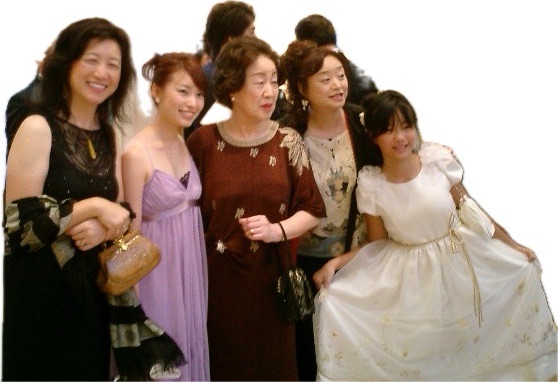
Women in my family – from left – me, my daughter, mom, my sister, my niece

My mother suddenly died in 2012. It was the year after the horrific earthquake and tsunami followed by the unbelievable nuclear meltdown in Fukushima. How time flies relentlessly… Her death was totally unexpected. She was only 82 and relatively well. One day, she had heart failure while taking her bath, and drowned.

She was a creative person, elegant and fashionable. A huge collection of her clothes was left behind. It was a weird feeling stepping into the familiar house with all her clothes, and her scent vividly present, but mom herself was gone…nowhere. Yet I feel like I can still hear her voice, her sigh, and laughter…My father passed away late last year, so my sister and I had to do something about their stuff.

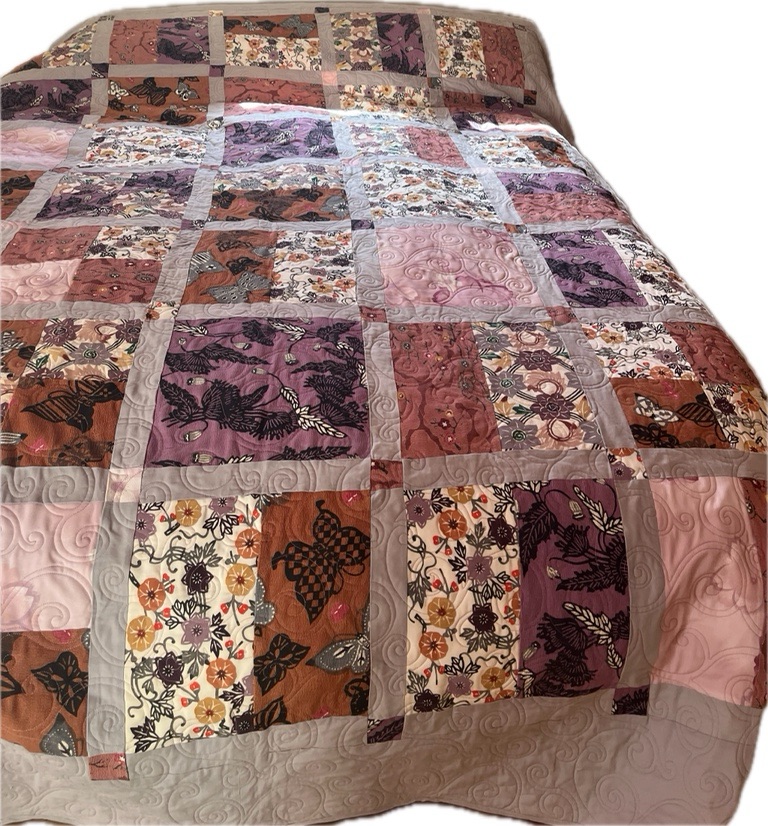
One of the big problems was my mother’s hand dyed silk clothes. She dyed them herself, all from scratch and made into beautiful dresses, but all specifically fit to herself. Unfortunately, neither my sister nor myself could wear her dresses. Over many years I watched mom working hard day and night hand-dyeing the silk. She would make patterns, etch and cut, color onto silk, wash, dry…etc., such a complicated process… Who could throw them away, or donate them to strangers who might or might not appreciate the love and sweat that went into the silk. But then, what should I do with them? After thinking hard, I came up with an idea. What if I undo all the dresses and turn them into patch-work quilt and make bed spreads for my sister and myself?

However, there was a serious problem. I had no idea how to quilt; absolutely zero experience and zero knowledge about quilting. It was an incredible challenge for me and I didn’t even know where to start.

Right then, Jeanette came into my life, like an angel God had sent for me, and offered to teach me how to do this step by step. Thus…. the challenge of making my first ever quilt began. I opened my sewing machine which was tightly put away in its cover case. It had traveled with me through many moves, once across the Pacific Ocean, and had never been opened for many years. OMG… it was in disappointing shape. Some critical parts were missing, and it was in no way usable. So that was the end of my sewing machine that had traveled all the way from Japan 35 years ago. Jeanette mercifully lent me her machine.

My heart ached undoing my mother’s perfectly beautiful dresses. Yeah…mom had such sloping shoulders that were great in a kimono, but a couple of shoulder pads were necessary for dresses. She would hand-dye silk fabrics and dry them hanging wall to wall, like flags hanging in the house. I couldn’t help stopping my hand every time such memories occupied my head. What a slow process it was.

Even so, thanks to Jeanette, there are two beautiful bed spreads, after two years, all finished. My mother’s “bingata-zome ” dyes were reborn, reincarnated into something I could be proud of. I can tell my children, nieces and nephews, that these bed spreads were dyed by your grandmother, and quilted by Obaba (me). They can pass them on to their children for generations to come. Isn’t it wonderful?

I was so happy.

Thank you so much, Jeannette. I have no words to express my gratitude to you!

So…., I’m thinking….What should I quilt next….Is it going to be my new hobby?
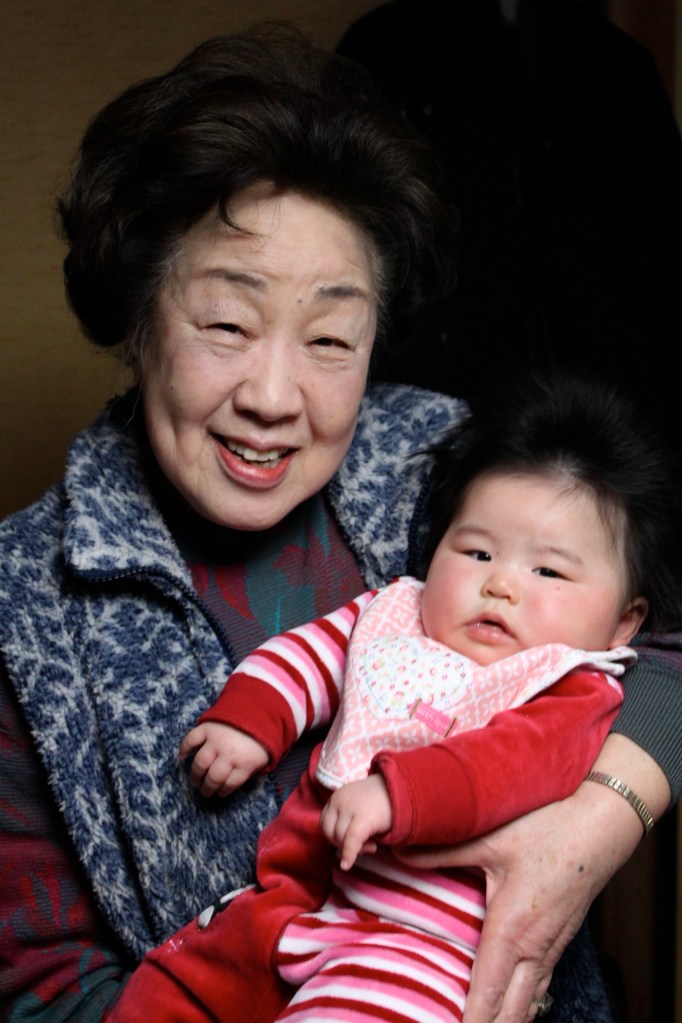
My mom and my granddaughter Sumi
Quilt Bed spread

母が突然亡くなったのは福島の大震災の翌年、もう13年も前の話だ。年月が経つのは容赦なく早い。母の死はひどいショックだった。母は82歳で元気だったのに入浴中に心不全を起こしてあっけなく溺死してしまったのだ。

おしゃれが大好きでクリエイティブだった母が残した膨大な洋服のコレクション、何年も手付かずに実家に残してあったのだが、父が去年の暮に亡くなったこともあって、ようやく重い腰を上げて実家の整理を始めた。なんとも不思議な感覚だった。母が大好きだった洋服に囲まれて母の声が、息づかいが、笑い声が聞こえてきそうなのに、母はいない。

1番困ったのは母の手染めのシルクの洋服。母の体型に合わせてカスタムメイドされているので私や妹が着ても体型的に合わない。母が一生懸命手染めしている姿を何年も見てきているので処分するなどとんでもない。考えあぐねた挙げ句、洋服をほどいてパッチワークのベッドカバーにしたらどうか。挑戦してみようかと思ったけど、そんなこと全く経験のない私、どこから手をつけていいのやらわからない。

そこにまるで、『神の御使である天使』のように現れたジャネットが、手取り足取り教えてくれると言ってくれて、生まれて初めてのキルト作りに挑戦することになった。何度もの引っ越しを経て40年近くもしまいっぱなしだったミシンの蓋を開けてみると、まあまあなんと足りないものだらけ。結局日本から持ってきたミシンは使いものにならず、ジャネットのものを借りることになった。

母の洋服をほどくのは心が痛んだ。そうだよなあ…

母は撫で肩で着物が似合う体型だったなあ、とか何にでも肩パッドを入れてシャキッと形作ってたよなあ、とか染め上がった反物を旗のように家中に干しまくってたなあ、とかいろんな情景が走馬灯のように現れて、その度に思い出に浸って手が進まない。

それでも、それこそ何から何までおんぶに抱っこでジャネットのお世話になりながら2年がかりで我が家用のクイーンサイズのベッドカバーと妹の家用のソファカバーを作り上げた。これならば母の紅型染の作品も生きる。「これはあんたたちのお婆さんが手染めして、それをオババが縫ってキルトに仕立てたベッドカバーなんだよ」と何代にも渡って子供たち、甥や姪たち、孫たち、ヒー孫たちに語り継いで、残していくことが出来る。すばらしいじゃない?

すごく嬉しかった。

ありがとう、ジャネット。心から感謝している。なんとお礼を言ったらいいのかわからない。

次は何を作ろう、なんて考えたりして…

私の新しい趣味になりそうな予感。

Leave a comment

Stuff

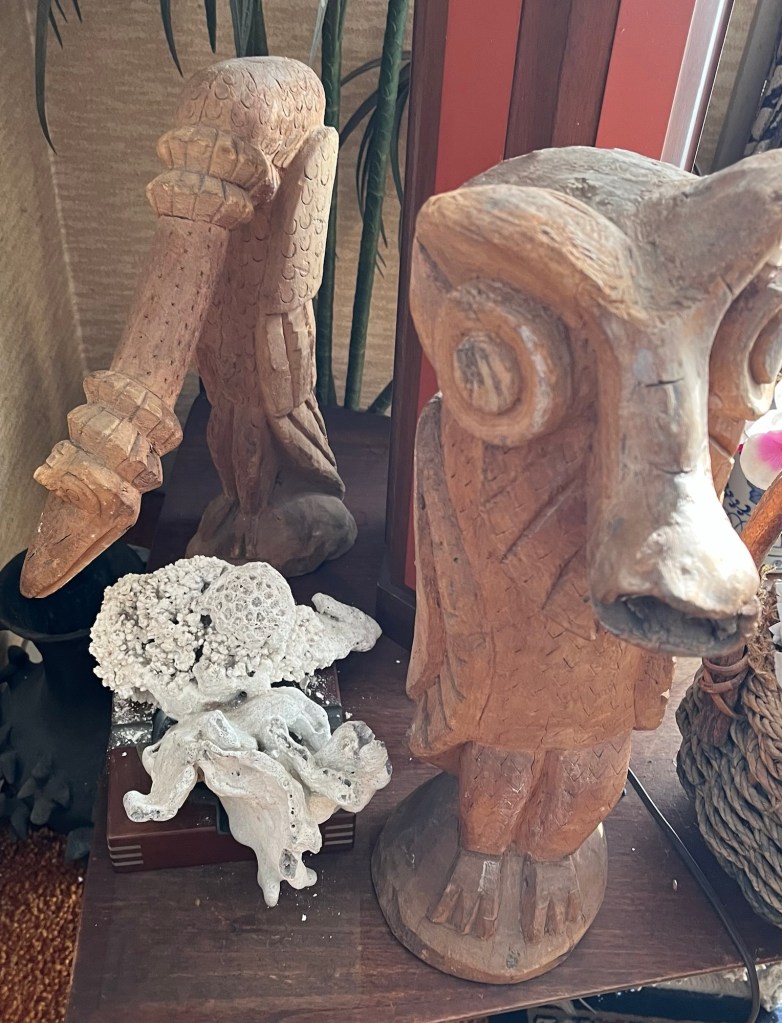
—The wooden birds at my parents’ living room—

Two months after my father’s funeral, I went again to Tokyo and spent the whole month sorting stuff at my parents’ house.

It was overwhelming. Amazing volume of stuff, like my mother’s clothes, kimono, her artwork of silk-dye paintings, bone china paintings, and her water color Japanese paintings, lots of gifts given to my father during his 30 years of working in Los Angeles, Indonesia and San Francisco, many of them still beautiful, carved on valuable teak woods that are now extinct, and also…there are many artworks my parents purchased….Where can I start?

I did my best to sort stuff to a pile of keeps, no keeps, and throw aways in that one month I was there. However, I was no way near finishing when I had to return to Canada.

It was beyond my imagination how difficult this task could be….I was stunned to see how wasteful…. I was surprised to find out how different we all are. Even family members have different views and values, different reactions, different tastes…..

Just after we arrived in Los Angeles in 1969, we went on a family driving trip to Mexico. The moment we crossed the border from the US to Mexico, the scenery changed drastically, from green lawns to brown desert. Dry dusty sands were blowing everywhere and tiny houses looked built with layered carton boxes. People looked poor wearing clothes torn and disfigured. I was shocked to see how differently inside and outside of the border looked.

We saw a man with brown tanned face wearing a big straw hat, putting some wooden carved birds at the roadside. My mother said, “how interesting! Can we stop and see?”

So we stopped our yellow Chevy Impala, got out, and looked the birds that this cheerful and friendly man had carved. The birds were so simple, not even oil stained, but so interesting and cute.

From that day, for 55 years the birds sat in the corner of my parents’ living room and watched over us. Whenever I saw these birds, I thought of the man’s smiling face, his straw hat, the burning sun, the dry sand, the poor villages….. I couldn’t dare throw the birds away. I wanted to send them to Canada. However, I was told that since the birds were carved with untreated wood, they would not be permitted to enter Canada. I was crushed…so sad.

After I came back to Canada, I received a message from my daughter in Tokyo. “Look who are here!” The wooden birds are now sitting in my daughter’s home! ‘Oh they were adopted!’ You wouldn’t believe how happy I was!

I was born in 1955, only 10 years after the end of World War II. I grew up during the time Japan was so poor, just recovering from the dreadful war, and there was nothing. Things were scarce and nobody had anything luxurious. ‘Do not waste things,’ ‘you have to take care of things’, ‘cherish your possessions’, my parents and grandparents told me over and over. Perhaps that’s why my heart aches when I see things that look completely fine thrown into the garbage pile. I hear the utterances of others…. I don’t want this… I don’t want that… it’s not my taste…. it doesn’t suit my house….,I don’t have the space for this…..

I know it’s a popular trend to get rid of things, keeping the bare minimum, and living a simple life as an extreme minimalist.

However, I can’t do that. Of course, I don’t agree with the lifestyle with too much stuff, the house turning into a hoarder’s.

But for me, stuff is part of my history.

I would like to treasure things that bring back memories. I want to keep loving stuff that had dear meanings in my life. I would like to value my relationships with those special things.

After all, did you know that Zen Buddhism which is supposed to have had immense influence on Japanese culture, actually teaches that ‘things’ have souls as well?

—The wooden birds in my daughter’s home—

2024年の年末に父が他界した。お葬式の2ヶ月後、私は再度帰国してまるまる1ヶ月ほど実家の整理に明け暮れることになった。実家は亡き母の洋服や着物、母の作品である紅型染や陶器の絵付けや日本画の数々、亡き父の30年にわたる海外駐在中に贈られた置物の数々(多くは今は絶滅したとされる美しいチーク材だ)、それに加えて両親が購入した記念品や美術品で溢れ、どこから手をつけて良いやらわからない状態。とりあえず手をつけられるところから、処分したり片付けたり、できるだけのことをしてカナダに帰ってきた。

それにしても何と難しいことか。なんと無駄が多過ぎることか。物に対する考え方が人それぞれどれだけ異なることか。考えさせられることが多かった。

1969年、ロサンゼルスに父の転勤で落ち着いたばかりのころにメキシコまで初めて家族でドライブ旅行をしたことがあった。アメリカからメキシコの国境を超えた途端、景色が緑の芝生から褐色の乾いた砂漠へとガラッと変わった。砂ぼこりの舞う乾いた土地に、まるでダンボールを重ねただけのように見える小さな家々、ボロボロの服をまとった人々の姿にショックを受けたことをはっきり覚えている。

そんな道端で一人の麦わら帽子をかぶったおじさんが素朴な木彫りの鳥たちを並べていた。母が目ざとく見つけて「面白いね、ちょっと止まって見てみようよ」と言う。私たちは道端に黄色いシェブロンのインパラを停めて、日焼けした人懐っこい顔のおじさんの木彫りの鳥たちに見入った。本当に素朴で木にニスも何も塗ってない、ただ彫っただけの鳥たち、でも何とも愛嬌があって面白かった。

その日から55年以上も2羽の木彫りの鳥たちは実家のリビングルームの一角で私たちの生活を見守り続けてくれた。鳥たちを見ると必ずあの日のおじさんの笑顔が、乾いた強い陽射しが、貧しい村々が、私の胸によみがえってくる。どうしても捨てられなくてカナダに持って帰ろうと思ったら、加工されてない生木の作品だから検疫を通れないと聞いて、泣く泣くあきらめることになった。がっかり…悲しかった。

カナダに帰ってしばらくしたら東京に住む娘の知香から写真が送られてきた。「ここに居るのはだーれだ?」何とあのメキシコの生木の鳥たちが娘の家にちんと居座っているではないか。ああ、引き取ってくれたんだ、と無性に嬉しくなった。

私は1955年生まれ。戦後10年の物のない時代に生まれて、『物を粗末にしてはいけない、大事にしなければいけない』と言われ続けて育ってきた。そのせいか、『これもいらない、あれもいらない、家に合わない、家が狭い、置き場所がない、』とどんどん捨てられていく物たちを見ていると胸が痛む。

今流行りの、物を捨ててすっきり、最小限の物だけで暮らすのが良いとするミニマリストの極端な考え方にはついていけないものを感じる。もちろん物がありすぎてゴミ屋敷になるのは困るけど、想い出に直結した物を大切にすることも大事なんじゃないか。生きてきた軌跡を愛でることは単なるおセンチだとは私は思わない。

『物にも魂がある』というのは大切な禅の教えじゃなかったっけ?


1 Comment

Funeral

My father in 2019

My father’s funeral was held at his church in Tokyo. It was a Christian service. Although the minister of the church had never met my father, he performed a heartfelt, sincere service that I truly appreciated.

Although I appreciated the funeral service, I didn’t feel peaceful about everything else after the service. The farewell staging was so pretentious that it left me cold. I have to note that it was after the church service and it had nothing to do with the minister or the church.

The farewell staging, or final goodbye, included some discomforting rituals.

The funeral director from the undertaking company, for example, told us to stroke my father’s face to express our love. The family members all stroked the icy cold face.

I also felt awkward sitting in the hearse which was driving off from the church while a group of people singing hymn were seeing it off. It reminded me of a scene from a century old black & white movie. The hearse carried my father and us to the crematorium.

And more dreadful ritual was that the family members picked up his burnt bones with chopsticks and placed them into the urn.

It didn’t sit well with me at all. I felt extremely uncomfortable. People say it’s just how funerals are conducted in Japan. It’s one of those cultural things. It sure is a big cultural difference. But it was not just that. Something was making me feel uneasy. What was it? I kept wondering.

It’s been almost 3 months passed since that funeral day. Thinking back now, I feel that the reason I felt so uneasy could be coming from my fundamental lack of understanding.

What is the objective of the funeral? I feel that in Japan the focus of the funeral is on “death”. It reminds us over and over that the person is now dead.

The focus of a funeral in Canada, where I have been living for the last 35 years, is more on “life”. The life the person lived is remembered.

I still remember how the cold face felt on my palms. It was something I didn’t want to remember. I wanted my father to be alive in my memory until the day I die. I wanted him to be a healthy lively person with a warm and beautiful soul, not a cold corpse or fragile bones.

Experiencing such a cold face would be too shocking for my little grandchildren. I worry that they would only remember that coldness rather than the warm smile and beautiful bass voice of their great grandpa who loved them.

My heart sank. It was the saddest day of my life.

父のお葬式はキリスト教の教会で行われたとはいえ、日本の典型的なお葬式であったことは歪めない。日本のお葬式とカナダのお葬式はなんだか根本的に違う気がする。お葬式の式自体は、父に会ったこともない牧師さんだったとはいえ、心のこもった誠実な式だったと思う。

でも式の後のお別れの演出が何ともわざとらしくて嫌だった。例えば葬儀社の人が、親族の人たちに、冷たくなった父の顔を撫でるように誘導したり、霊柩車を見送るときに讃美歌を歌いながら見送ったり…。そうしてそのまま火葬場に行ってお骨拾いをしたり…。

何か違う、なにかそぐわない気がして抵抗感があった。もちろん文化の違いだと言われればその通りだと納得せざるを得ないのかもしれない。でも何か違う。何だろう、どうしてこんなにモヤモヤするんだろう、とずっと考えていた。

3ヶ月たった今思うと、結局、根本的にお葬式の意義というか、目的というか、フォーカスのようなものが私の知っているカナダのお葬式とは違うような気がするのだ。つまり、日本のお葬式は『死』がフォーカスであるのに対してカナダのお葬式は『生』がフォーカスなのかもしれないと思った。日本のお葬式がその人が死んだことを、これでもかこれでもかと強調するのに対して、カナダのお葬式はその人の生きた人生を強調する。もう35年もカナダに住んでいる私はそういうカナダの感覚に慣れきっているのかもしれない。

私は正直言って冷たくなった父の顔を撫でてその冷たい感触がずっと手を通して私の中に記憶されるのに抵抗を感じる。父は私の記憶の中でずっと生きていてほしい。いつまでも元気で温かい父の感触を覚えていたい。死んで骨になった父ではなく、生きていた元気な父をいつまでも覚えていたい。孫や小さな曾孫が曾祖父さんのことを、触ったときの氷のように冷たい感触として覚えるのではあまりにもせつないではないか。温かい笑い顔を、美しい低音の声をいつまでも覚えていてもらいたい。

無性に切なくて胸が痛む1日だった。


Leave a comment

Don’t Look Up ドント・ルック・アップ 


Beautiful planet earth
My beloved family in Hawaii
My beloved family in Lions Bay
My beloved family in Japan
Raiden and Tora 🥰

Recently, I watched the movie that everybody is talking about, “Don’t Look Up” at our friend’s home here in Powell River.

A girl who is a PhD candidate discovered a comet which is rapidly approaching planet earth, and calculated that there is a high probability of colliding with earth in approximately 6 months time.

The story was utterly and depressingly realistic. In fact, I have heard that dinosaurs went extinct because of collision of a comet, which created the Ice Age by a huge volume of ash covering the earth blocking the Sun for a long time. How can you be sure it could never happen again? The PhD student and her professor reported this news to the world, and people’s reactions, when they heard this, were amazing. Most of them didn’t believe it. They didn’t take it seriously and laughed. Some business people used the story to make money. Some politicians used the story for their own political gains. Most people just did nothing….even when it became clear that this was truly going to happen. People are unbelievably short sighted and self centered….so depressing and sickening.

I have a tendency to take things on a personal level. My thinking somehow doesn’t easily engage in the direction of social justice or political reformation when I watch movies, dramas, or read novels. I’d rather take the story personally, and think in relation to myself and my life. This movie was not an exception. I started thinking seriously what I would do if I got to know that every being on the earth go extinct in 6 months. I will die, and everybody dies, and everything will be destroyed in 6 months.

Since I don’t have any social status anyway, I wouldn’t be caring what people would think of me. Since everybody dies in 6 months and there will be no life anyway, what would be the use of having money? If I die in 6 months, my health wouldn’t mean much, as long as I would keep myself reasonably healthy for 6 months….might as well eat everything I love as much as I want, do/get everything I want as much as I want….

Wait…. but there are 6 months. I’m not dying right now. Maybe I can spend my money on making my loved ones happy….? I would fly to Hawaii, Lions Bay, and Japan to hold my children, grandchildren, and my dad and my sister as tight as I can…? I would fly to Japan and invite all my family to stay just one last night in a heavenly beautiful hot spring inn…? I would write letters after letters like crazy, letting people know how much I appreciate them, how much I love them…? I would definitely treasure and mindfully live every moment I would be with Neil and our dogs.

As I’m writing this, I have noticed something so stunningly disturbing. I am just as self centered as everybody in the movie. I am thinking of my own beloved family and friends, treasuring my own beloved life and time…..what about all the people who are not directly connected to me and to my life?

It made me re-realize how wonderful my friend “A” is, tirelessly working and actually doing things to improve lives of people who are living in poverty, and “H” who is actually doing so much to bring awareness to people and lobbying to protect vulnerable lives of animals.

つい最近、ここパウエルリバーの友人宅で、今話題になっているドント・ルック・アップ Don’t Look Up という映画を観た。

この物語は、博士号を取得するために勉強中のある女学生が、地球に接近中の彗星を発見して、複雑な計算の結果、約半年後に地球に衝突する可能性が強いことを人類に知らせようとする話。すごく現実的で、実にあり得る話だと思った。実際に恐竜が全滅したのも、彗星が地球に衝突したのが原因で、太陽の熱が厚い灰に遮られて氷河期に突入したからだと聞いたことがある。突然そんな彗星が現れても不思議ではないよね。でもその話を聞いた人間たちの反応がすごい。ほとんどの人たちが信じない。相手にしない。笑いとばす。その話を利用してお金儲けを企んだり、政治的に利用しようとしたり。信じられないほど短絡的で自己中心的。気分が悪くなるほど絶望的だった。

私は映画にしてもドラマにしても小説にしても、なぜかいつも社会的な見方をしないで、私的というか個人的な見方をしてしまう傾向にあるんだけど、今回もそう。地球が6ヶ月後に全滅するって知ったら、私だったらどうするだろうって真剣に考えてしまった。

どうせもともと何の地位もない私だから、今さら自分がどう思われようと関係ないし、6ヶ月後に全滅するんだったらお金なんてあったって仕方がない。6ヶ月後に何もかもなくなるなら健康的に生きても仕方がない? 好きなものをたらふく食べて、好きなものを買って、好きなことをして…

でも待てよ… 今すぐではなく6ヶ月あるんだから、私にとって一番大切な家族たちや友人たちが、最も幸せな6ヶ月を過ごせるようにお金を使うかな?日本に飛んで父や妹や甥姪を抱きしめる、ハワイとライオンズベイにとんで娘、息子、孫たちをかたくかたく抱きしめる… 家族みんなを日本に呼んで素晴らしい温泉宿で思い出に残る一晩を過ごす… 大事な人たちに手紙を書きまくる…感謝の気持ちを伝える…いかに愛しているかを伝える。ニールと犬たちと過ごす大切な大切な時間を噛み締める。

ここまで書いて、はたと思った。結局私も自分中心なことばかり考えているんじゃないか。映画の中の人たちと何も変わらないのではないか。自分にとって大切な人、大切なことばかりを考えて… 自分とつながりのない人や動物はどうするの?

改めて、貧困を改善する社会的な運動に一生懸命尽くしている友人「A」を始め、動物を守る運動をする友人「H」、素晴らしい尊敬すべき友人がまわりにいることに感謝した。見習わなければいけないと思った。